Skip to content

1950s — Today

Seventy years, told in the pictures the family kept

Scroll slowly. The photographs begin in black and white and warm toward the present as the story reaches it.

1950s

A mill at Muridke

A family sets down roots in the rice country north of Lahore and builds a mill.

In the 1950s Pir Syed Ijaz Ahmad Hashmi established Zafar Rice Mill at Muridke, on the road north of Lahore, within reach of the paddy fields of Narang — one of the country’s most celebrated rice-growing belts.

The first mill was modest: stone hullers, hand labour, and the seasonal rhythm of the crop.

What set it apart was an intent to mechanise a craft that, across Pakistan, was still done almost entirely by hand.
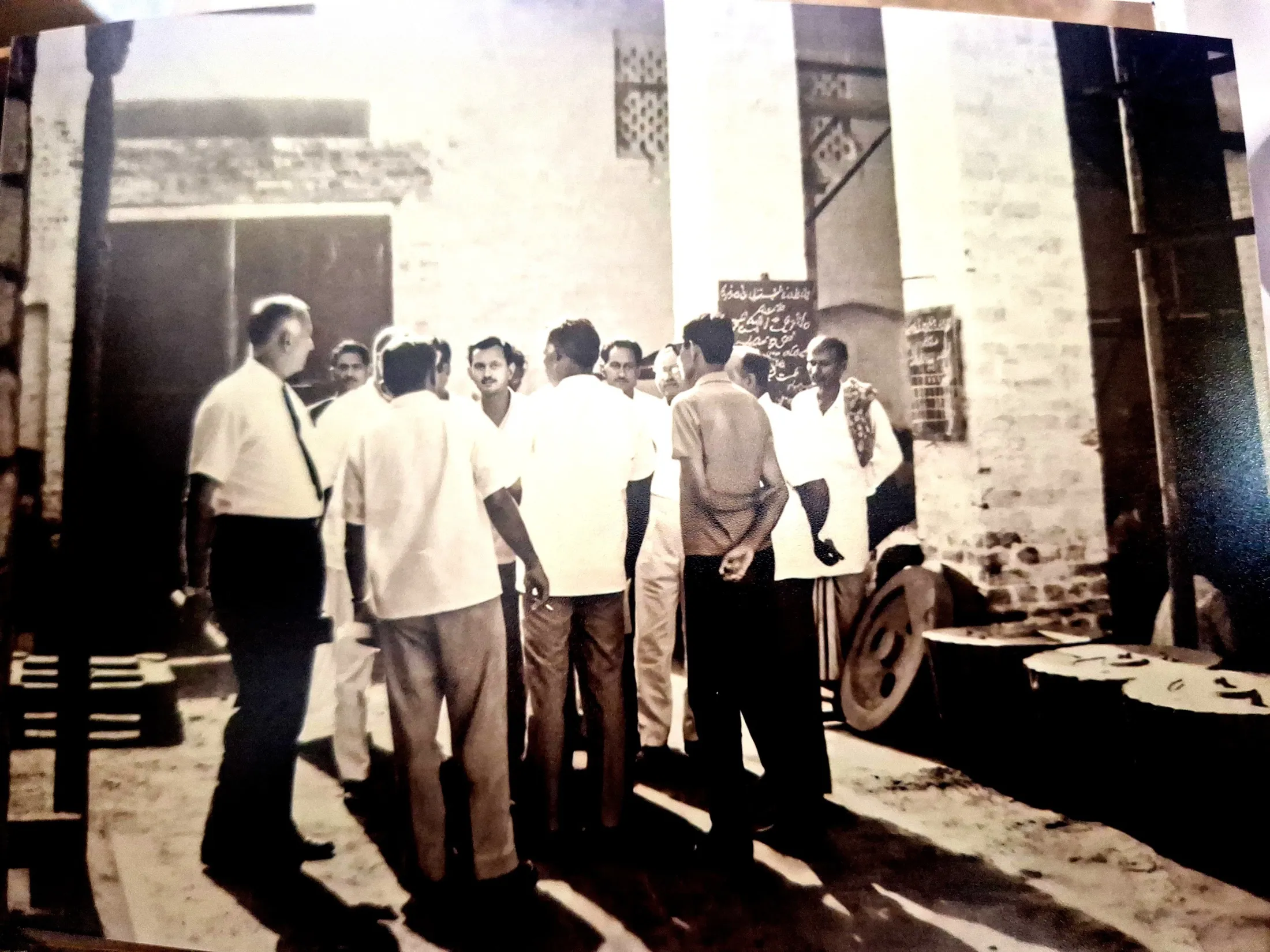
The mill courtyard at Muridke, heavy stone rollers resting against the brick wall.
The yard at Muridke.
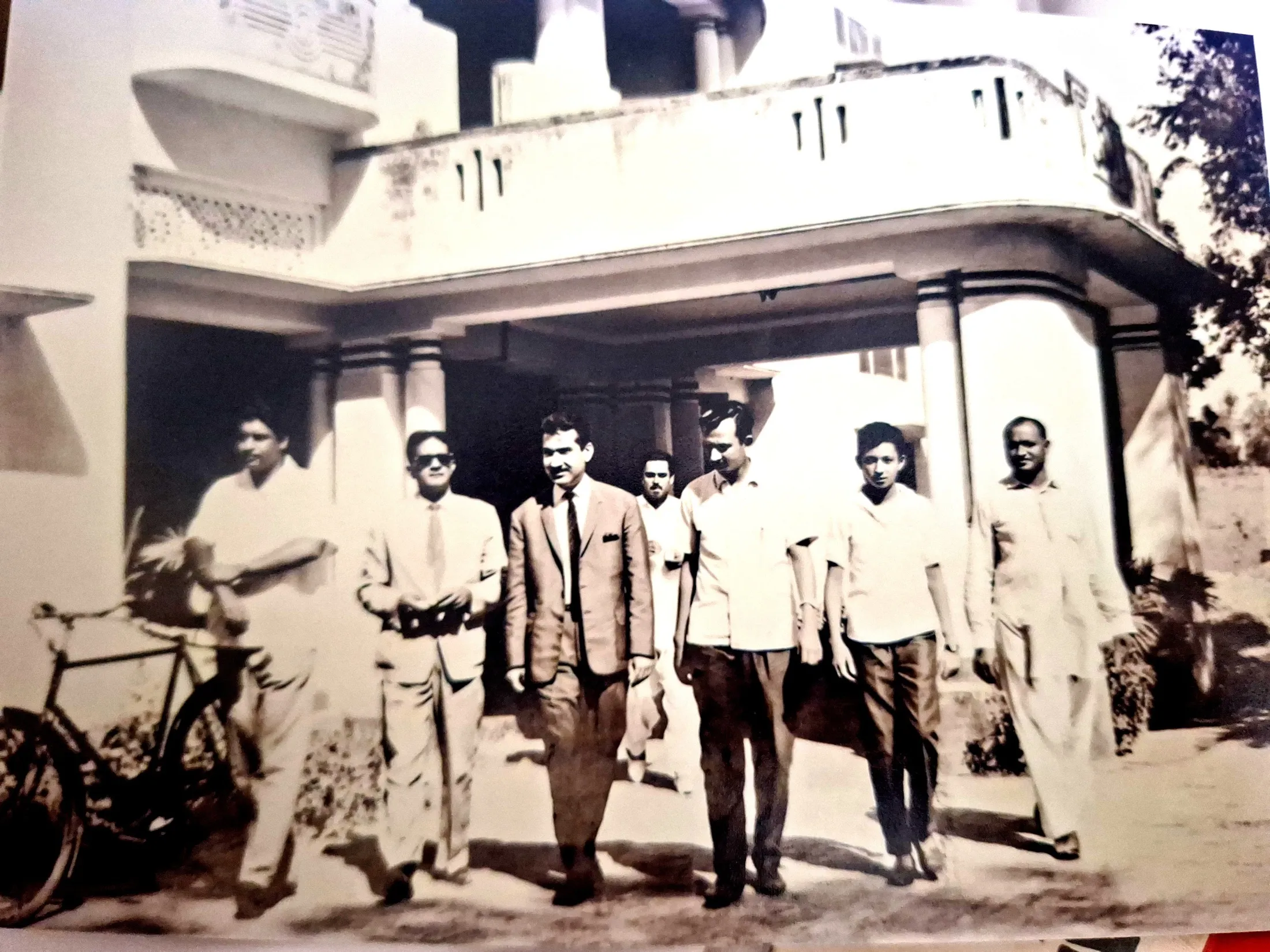
Men gathered outside a two-storey house with a columned veranda; a bicycle leans by the steps.
Outside the family residence.

Late 1950s–60s

Pakistan's first automated rice shellers

Foreign engineers help commission a mechanised milling line — the first network of automated rice shellers in the country.

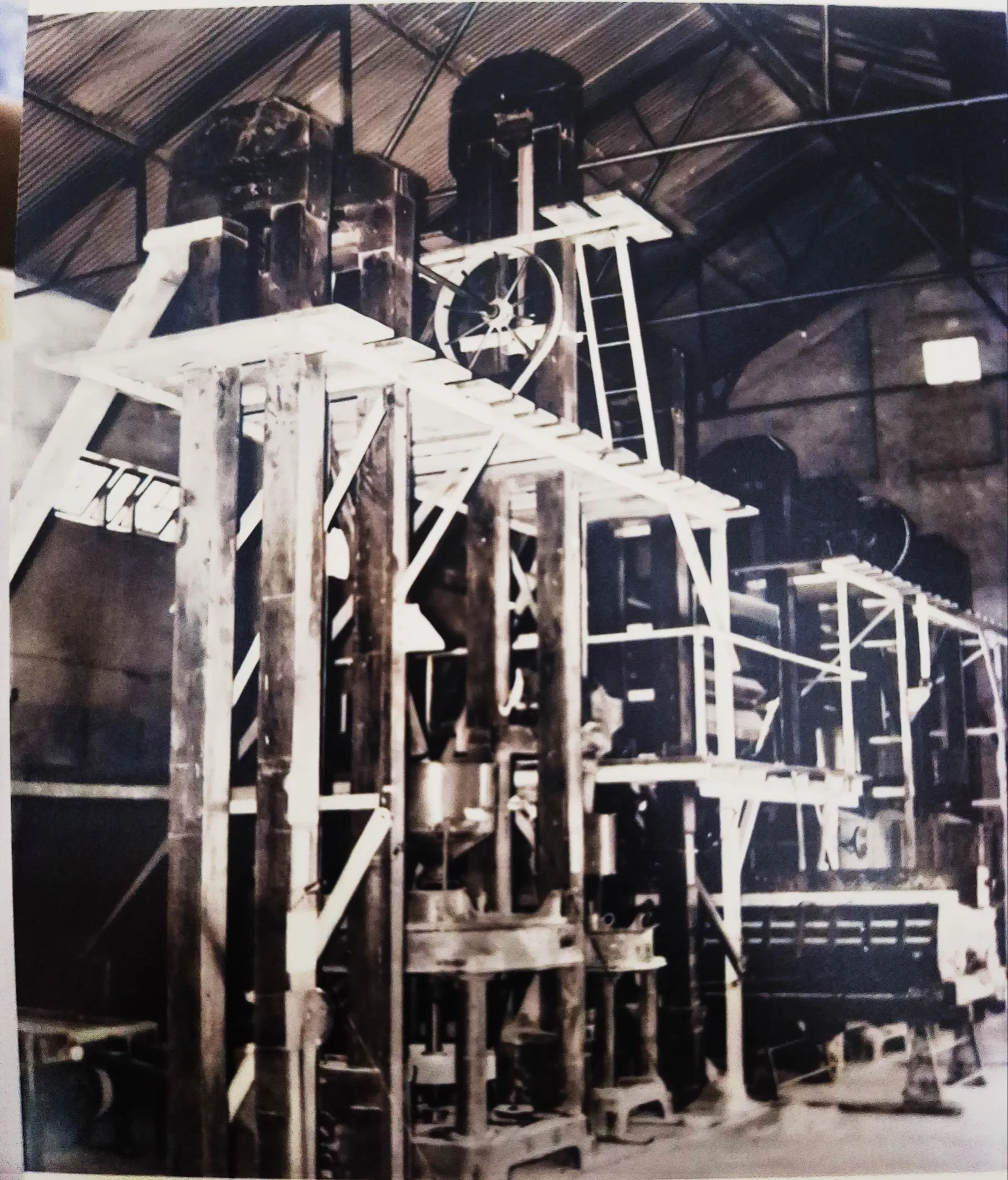
Through the late 1950s and 1960s the mill was rebuilt around a mechanised line. Zafar Rice Mill became the first to introduce automated rice shellers across Pakistan — replacing the stone huller with calibrated rubber-roll shelling, elevators, graders and a parboiling plant.

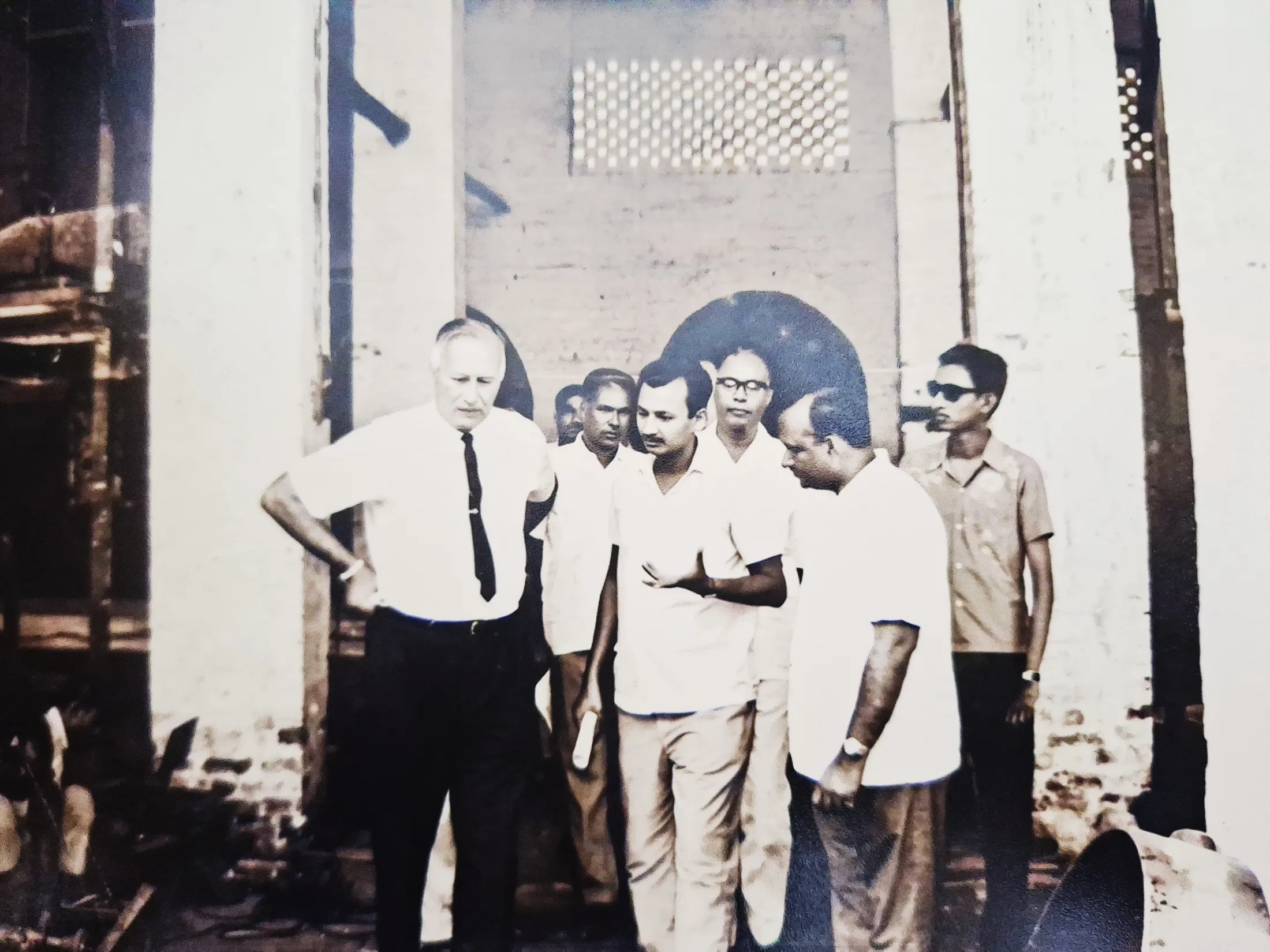
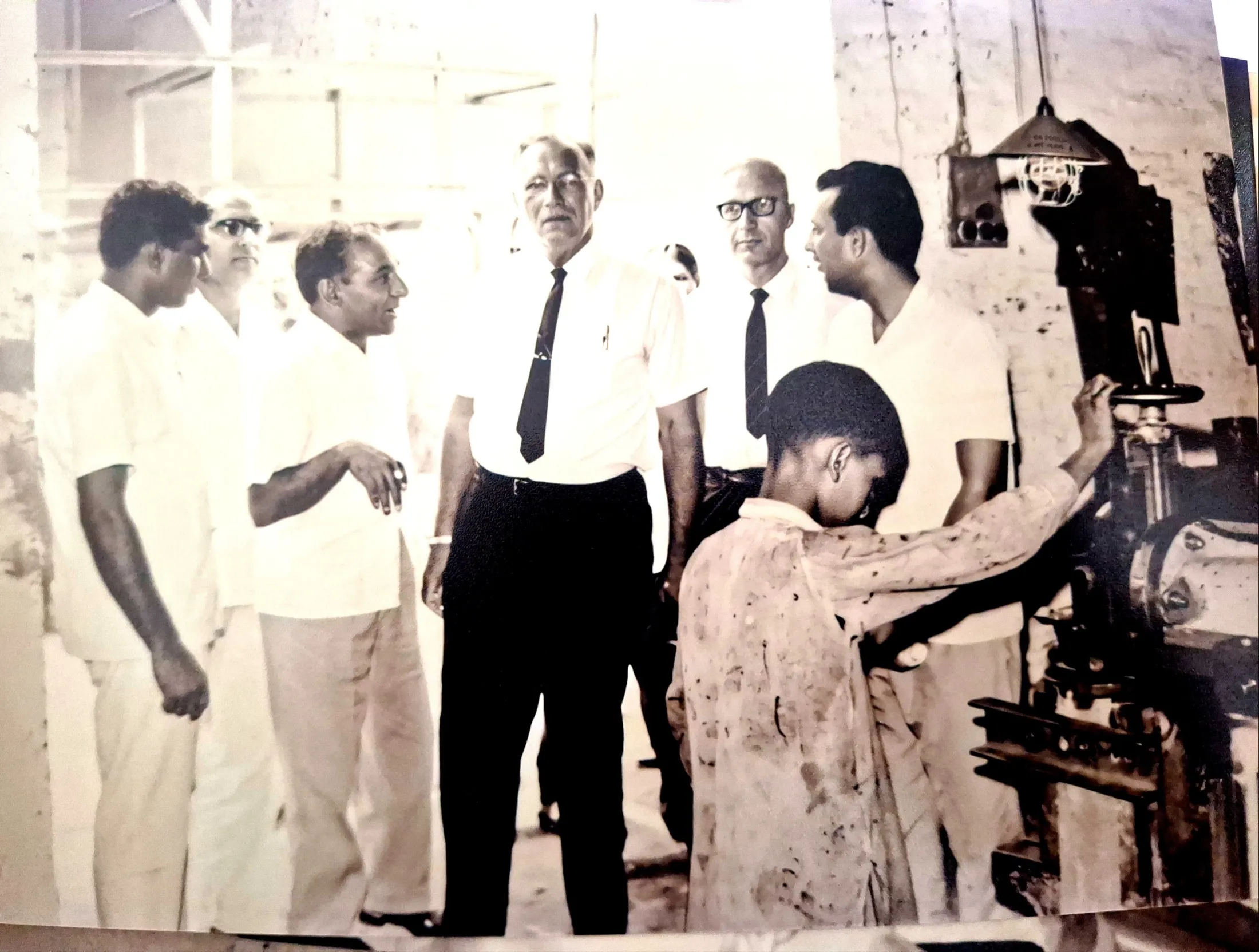
The photographs from this period show a team of foreign engineers on site — walking the floor, testing the sheller rig, checking the plant against specification.

It was slow, exacting work, and it set the standard the mill still runs on.

A multi-storey milling tower of riveted steel and timber staging, under the trusses of a shed roof.
The milling tower under the shed roof.
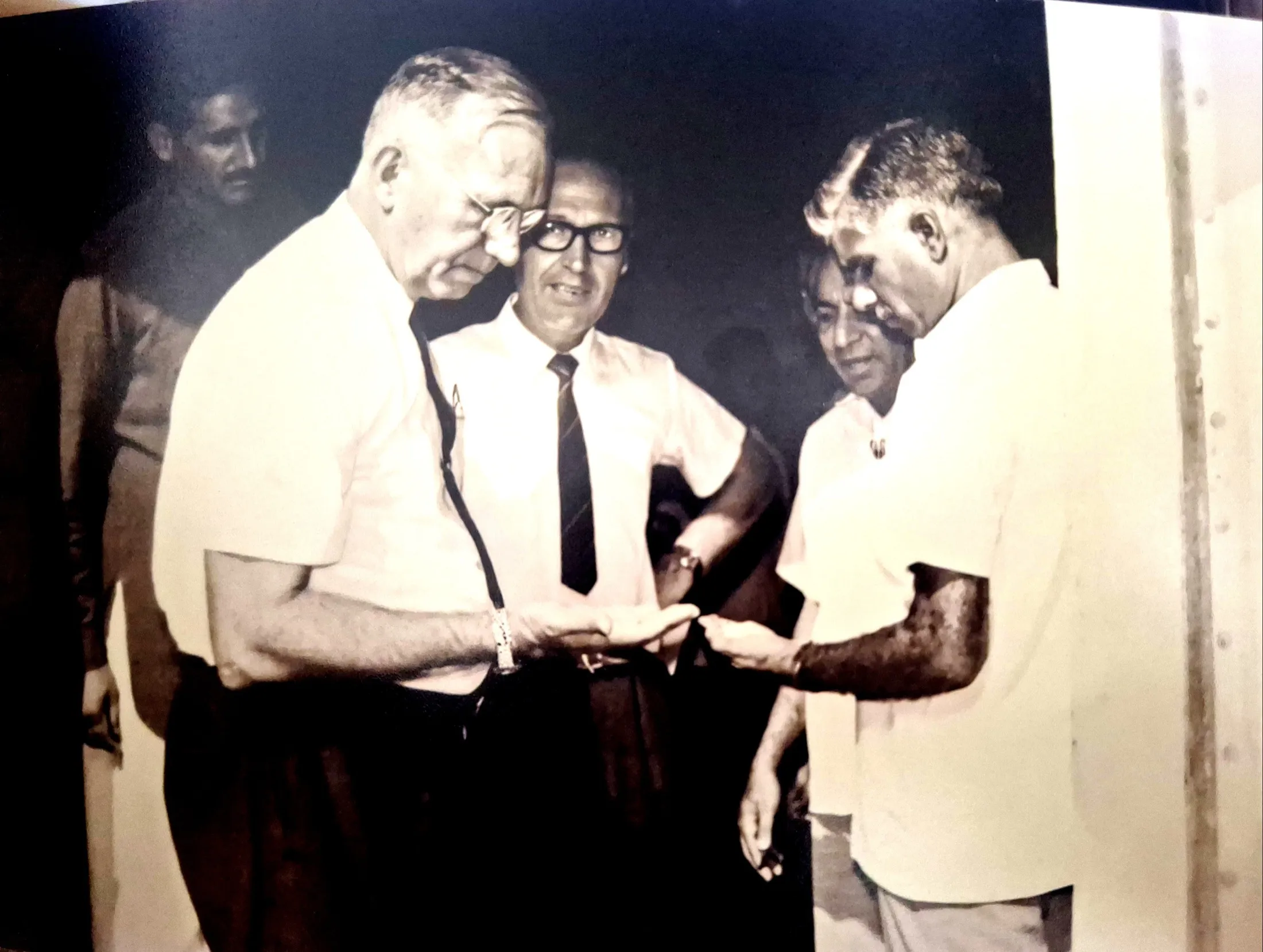
An older foreign engineer in shirt and tie talks with the management team inside the plant.
Commissioning the line with the visiting engineers.
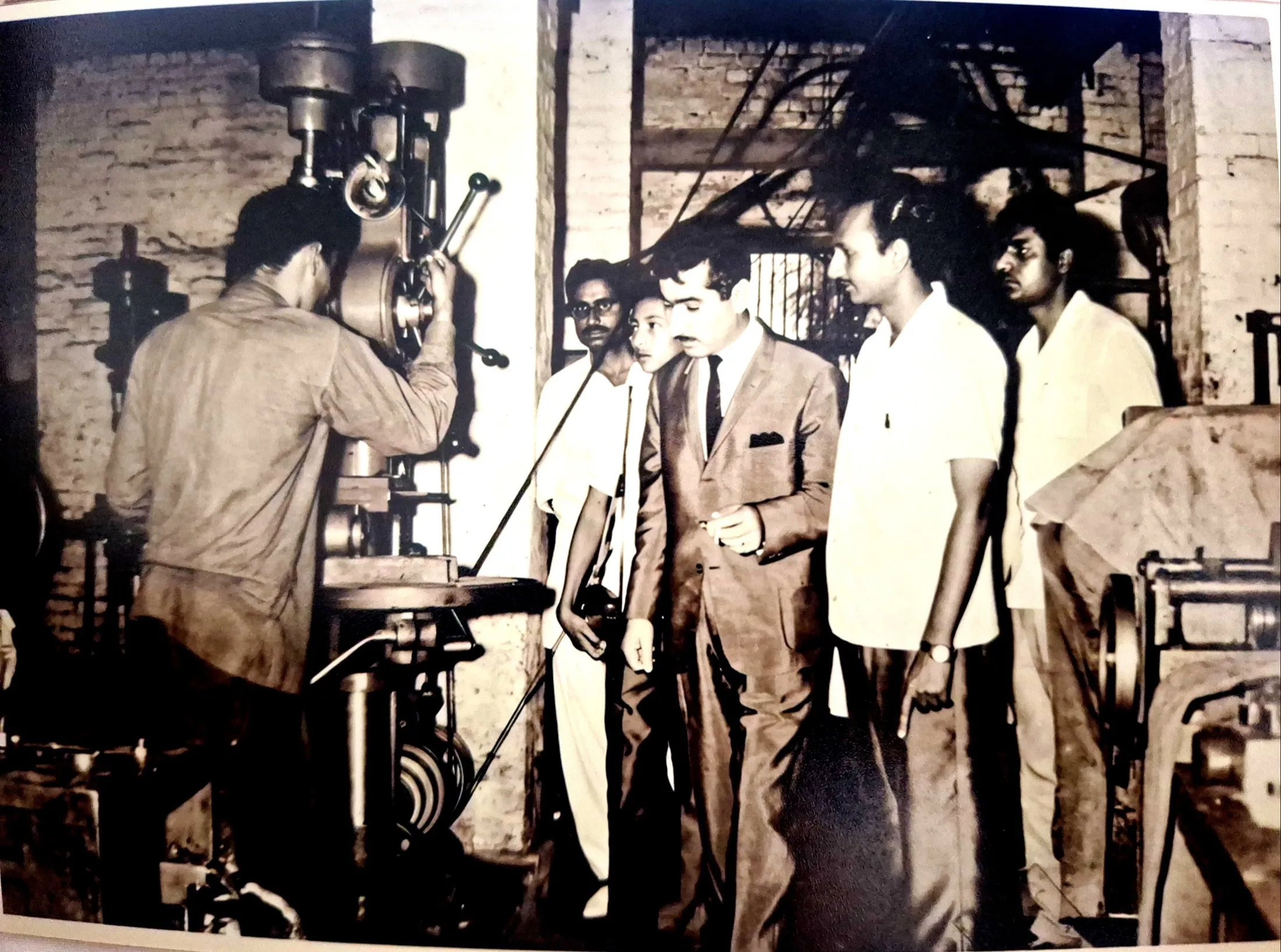
A fitter works a belt-driven drill press in the mill's machine shop while visitors watch.
The machine shop kept the line running.
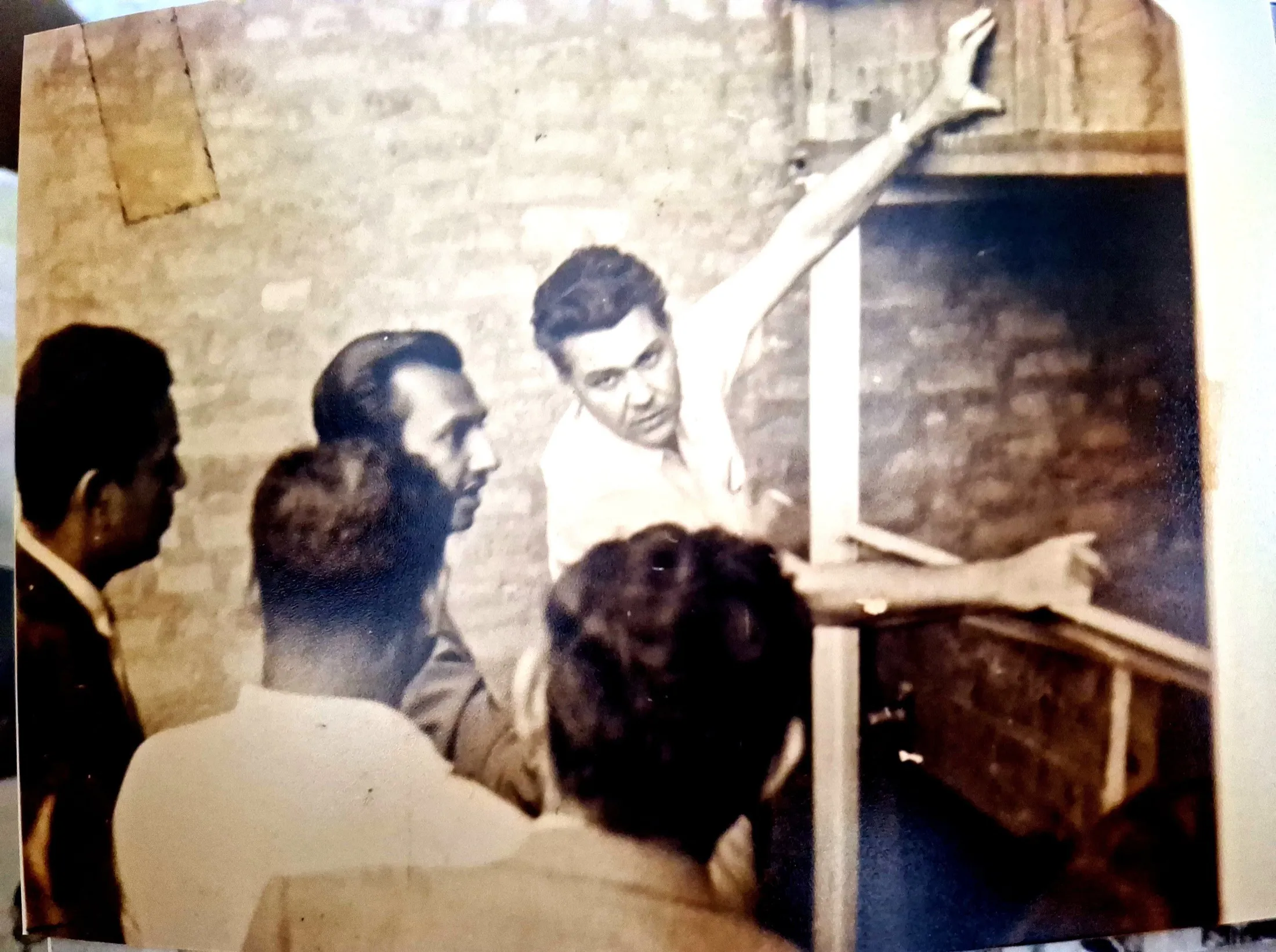
Men study a timber test rig; an engineer reaches up to the frame.
Studying the sheller mechanism.
A young mill hand turns a valve wheel as the founder and visitors look on.
On the operating floor.
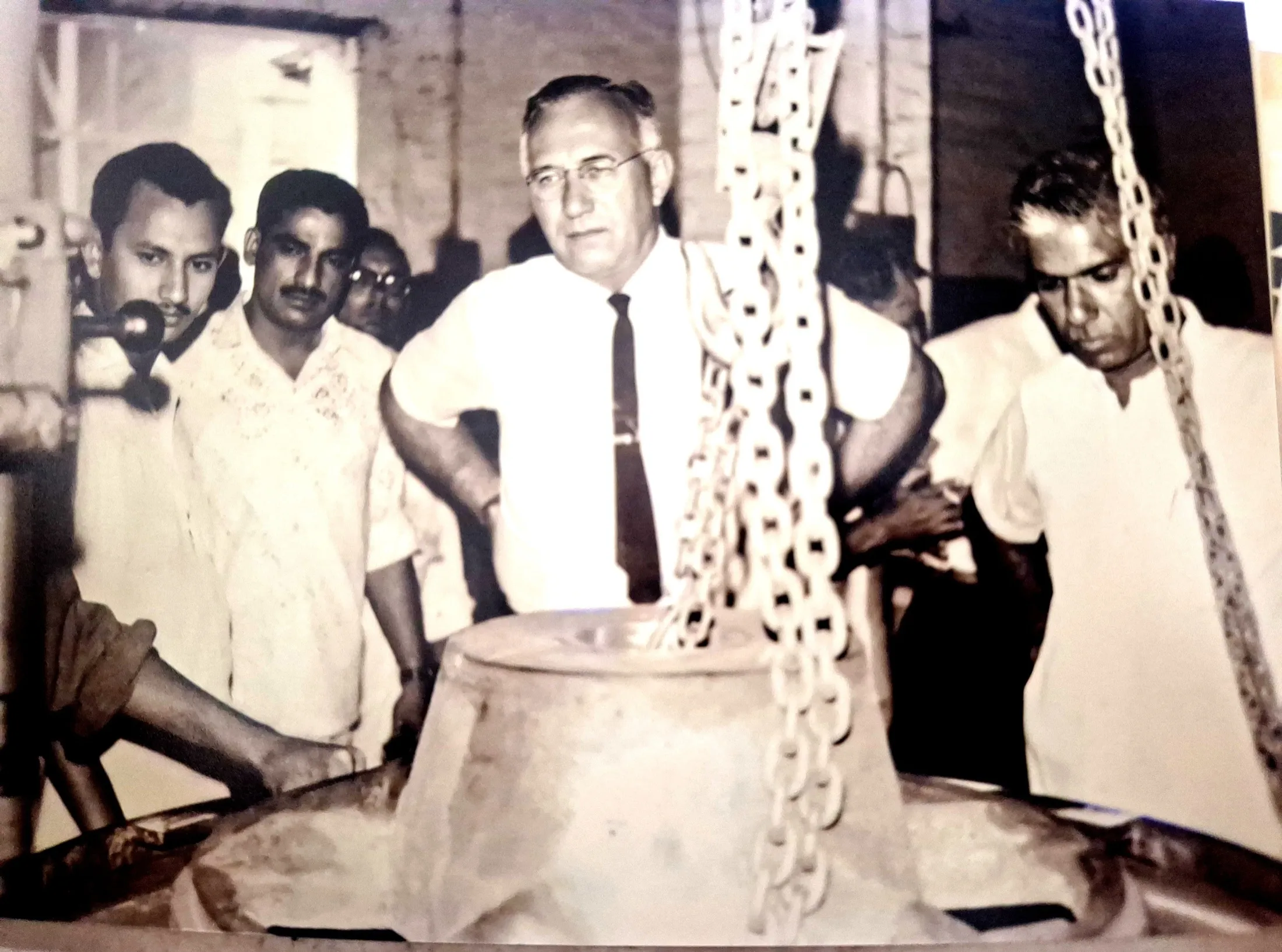
A large parboiling vessel with heavy hoist chains hanging over it.
The parboiling vessel.

1960s

A standard, grain by grain

The habit that outlasted everything: rice judged by hand, on the floor, every day.

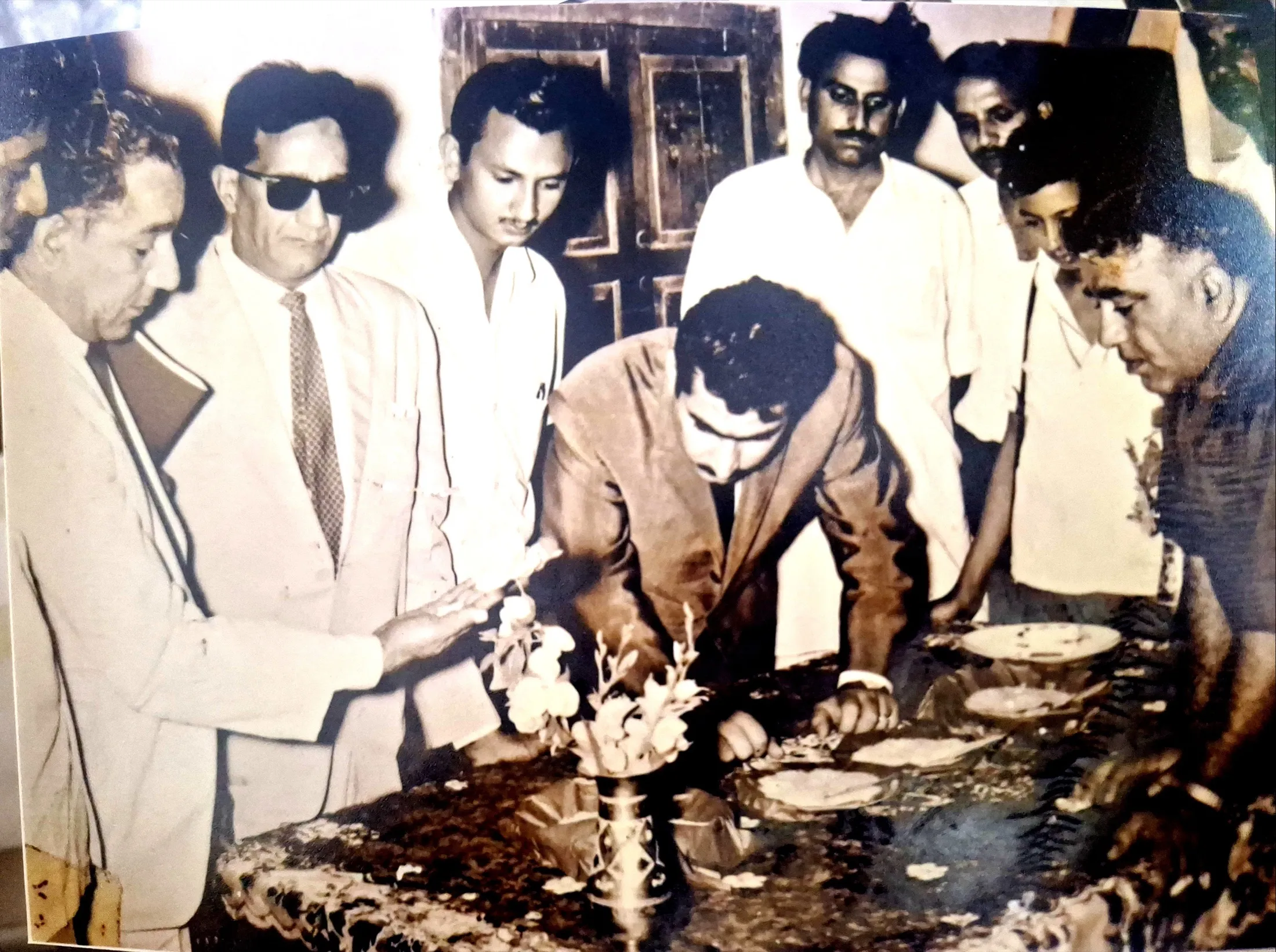
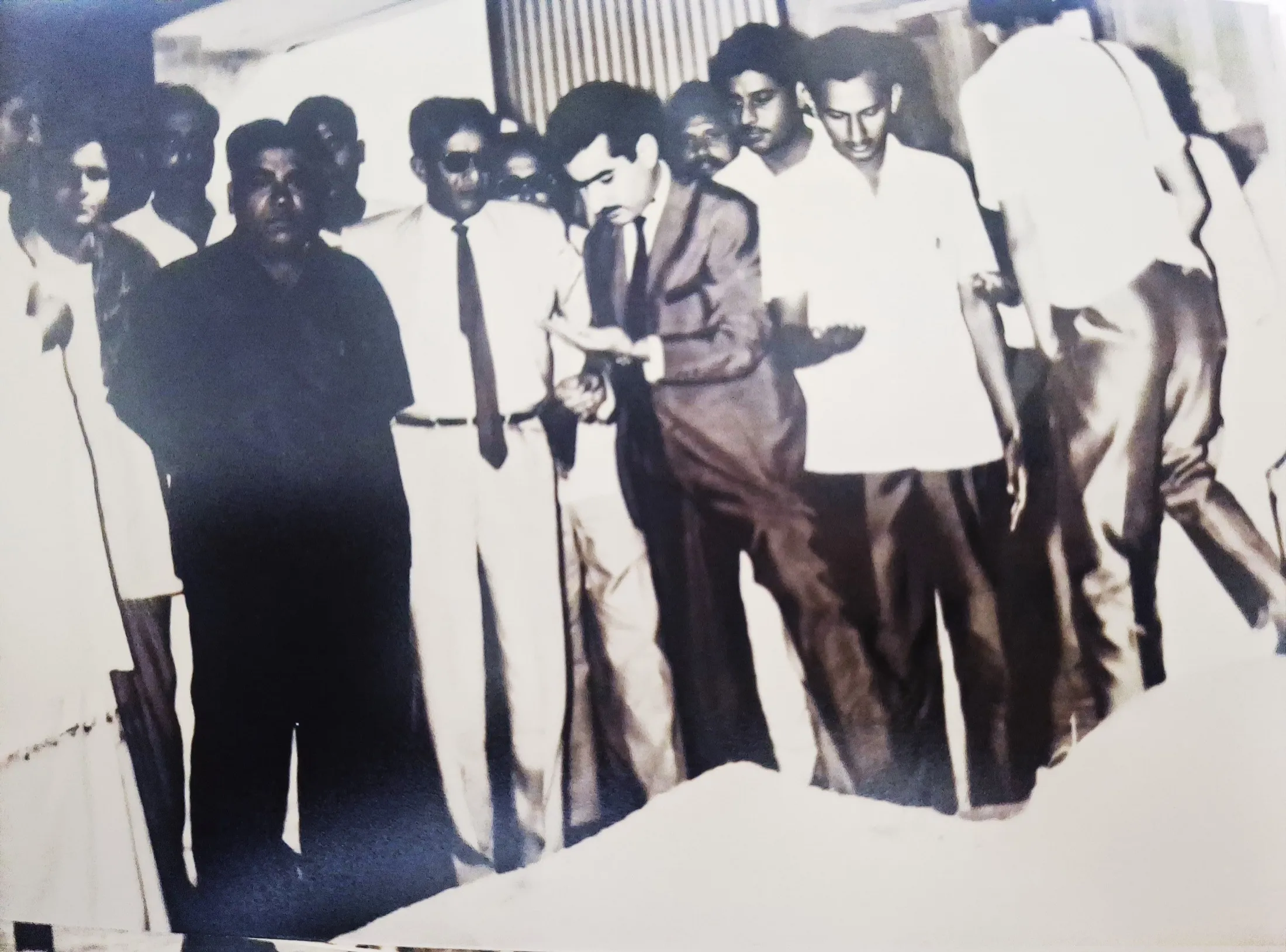
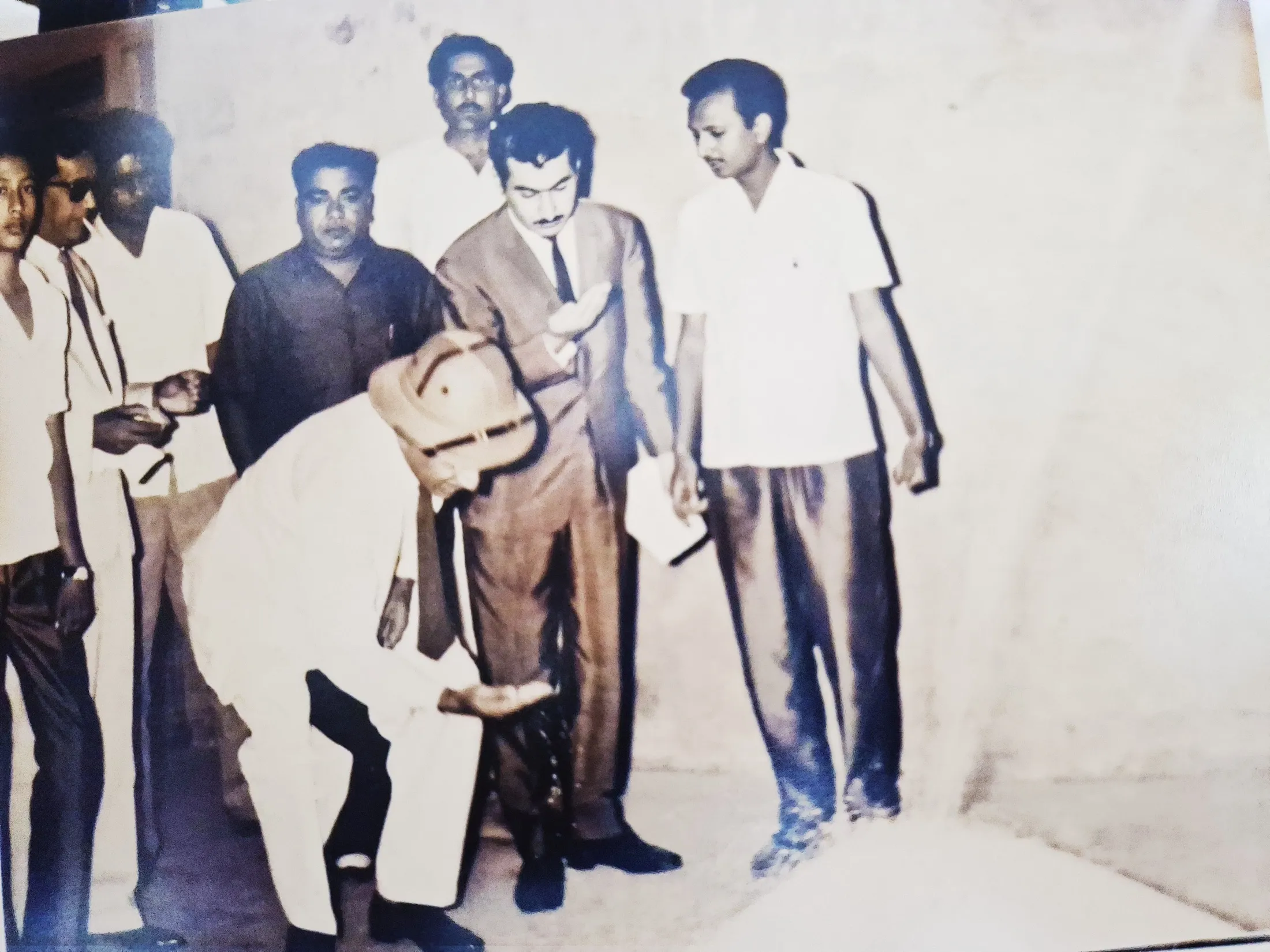
Machinery was only ever half of it. What the pictures keep returning to is people looking closely at rice — on tables, on trays, in cupped hands, poured out on the floor and read like a page.

That discipline is where the mill’s promise of quality at every grain actually comes from.

It was a house style before it was a marketing line, and it travelled with the family.

Men grade trays of rice at a table indoors; the founder leans in to inspect a sample.
Grading the day's run.
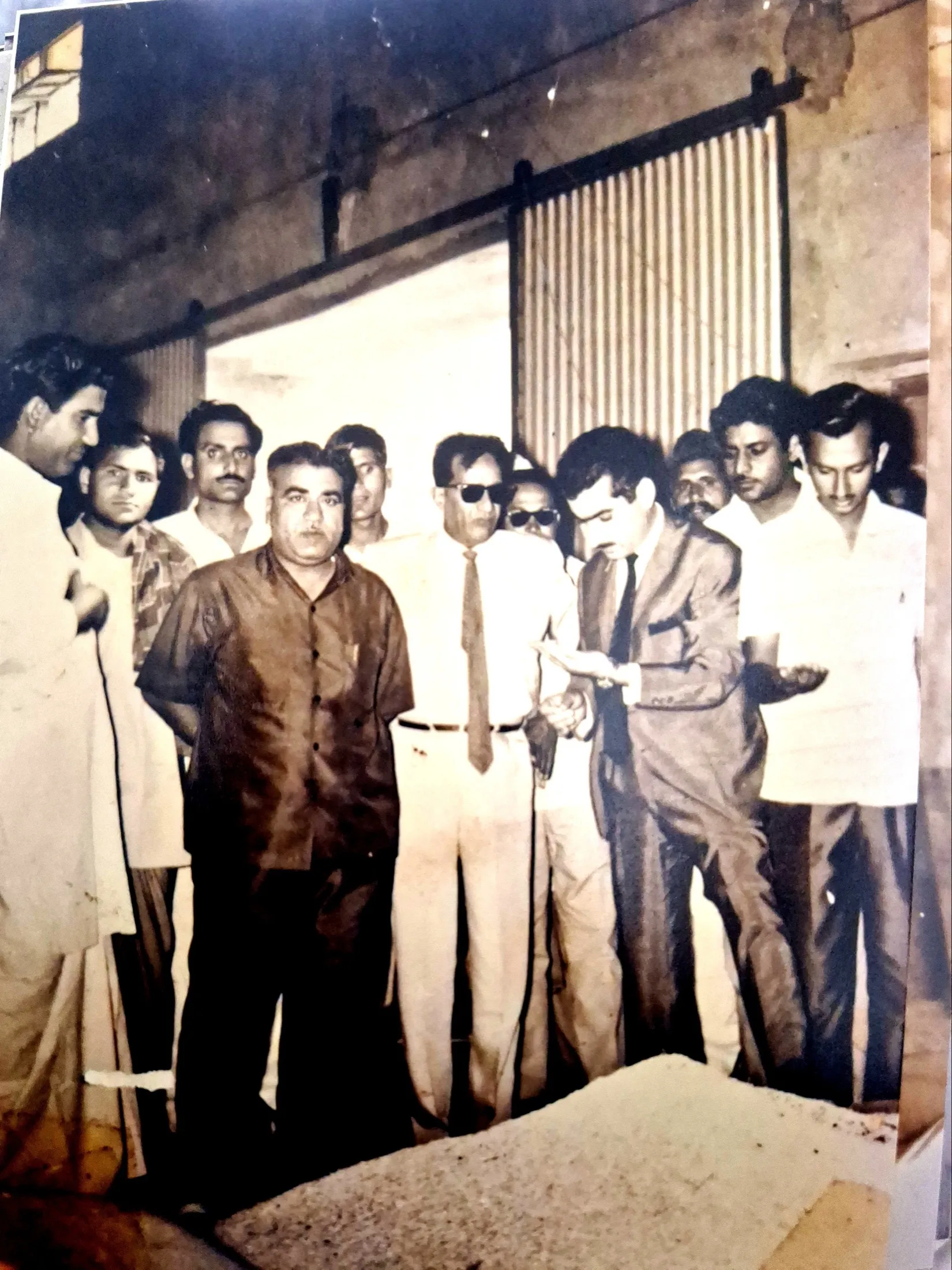
A group examines a large heap of freshly milled rice on the floor.
Checking a heap of milled rice.
Managers and visitors gather around a sample of rice spread out on the floor.
A sample, spread and read.
An engineer weighs a handful of grain by eye while others look on at night.
Weighed by eye.
Inspecting grain on the shop floor, the founder gesturing to a colleague.
On the floor, mid-season.
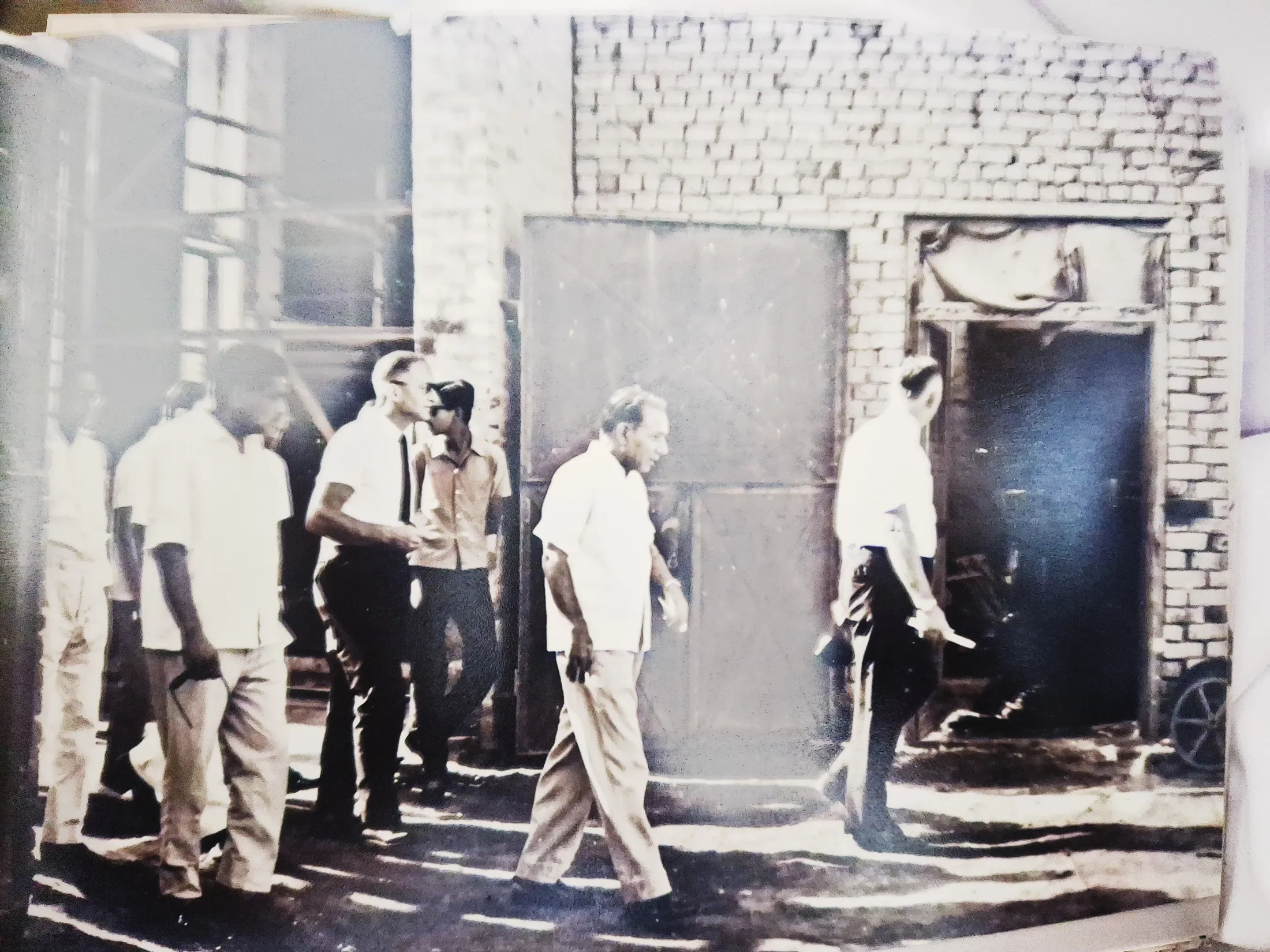
Visitors and staff walk the mill yard past the brick shelling house.
Walking the yard.

1960s

The people of the mill

A workforce, a visiting delegation, and a dinner to mark the work.

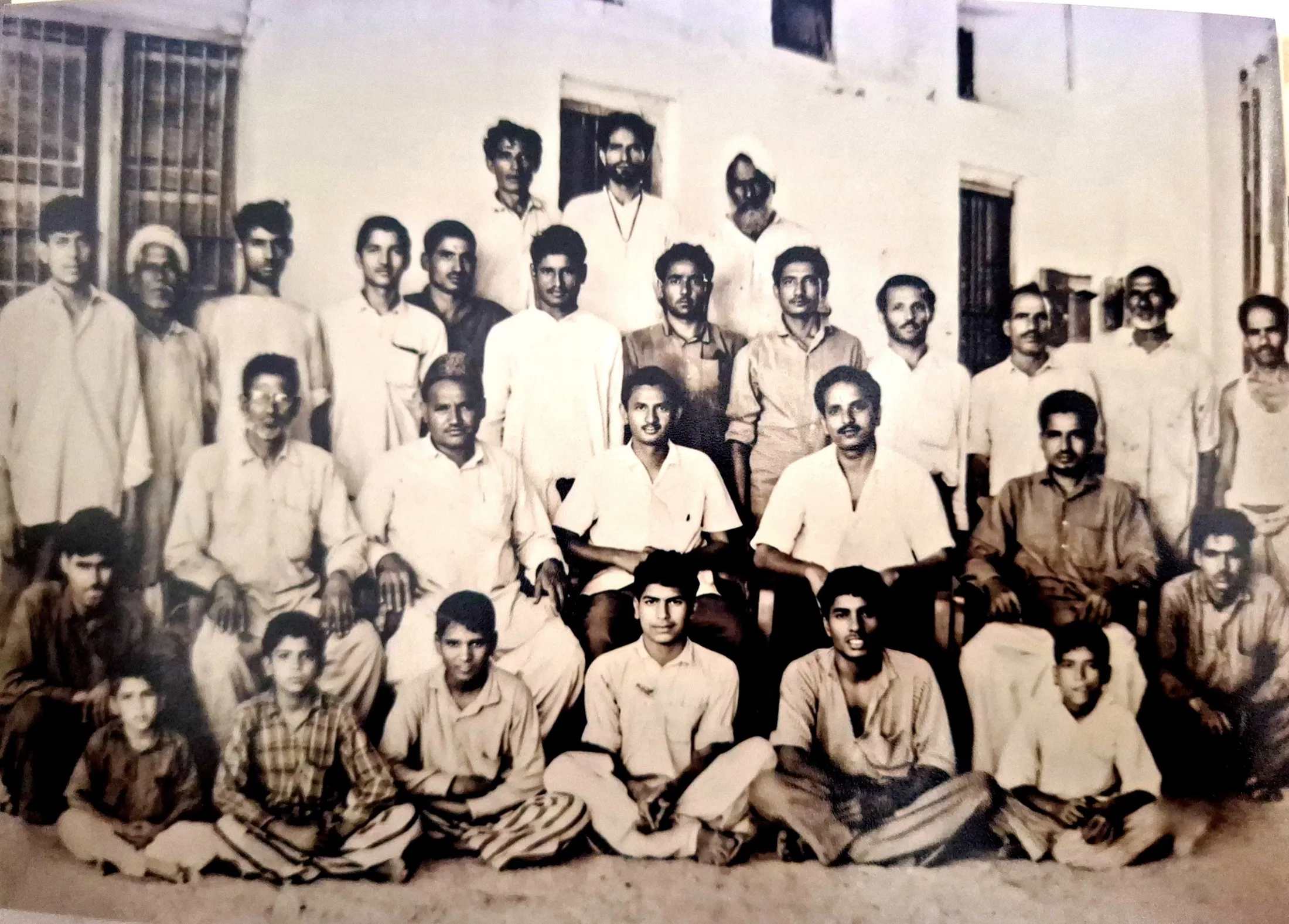
The mill ran on the men in the group portrait — fitters, graders, elevator hands, the machine-shop crew — many of them, by the look of it, from the same families over years.

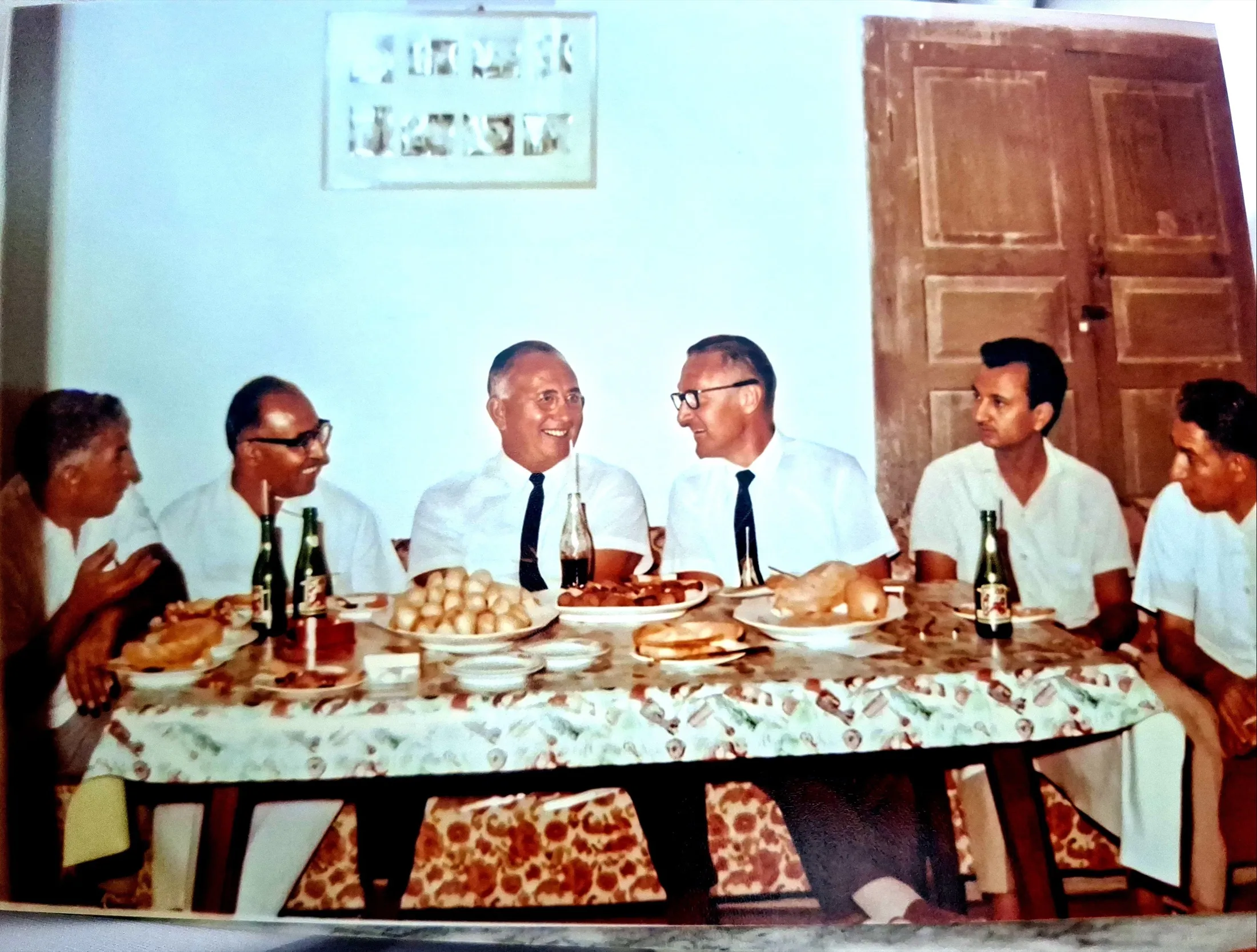
The dinner photograph — the one frame anyone shot in colour — marks the visit that mattered: the engineers who saw the automated line through.

The full mill workforce — around thirty men and boys — gathered in rows for a portrait.
The workforce, gathered for a portrait.
Men seated at a long table laid with food and bottled drinks; two foreign guests laugh at the centre.
A dinner for the visiting engineers — the only colour photograph in the set.
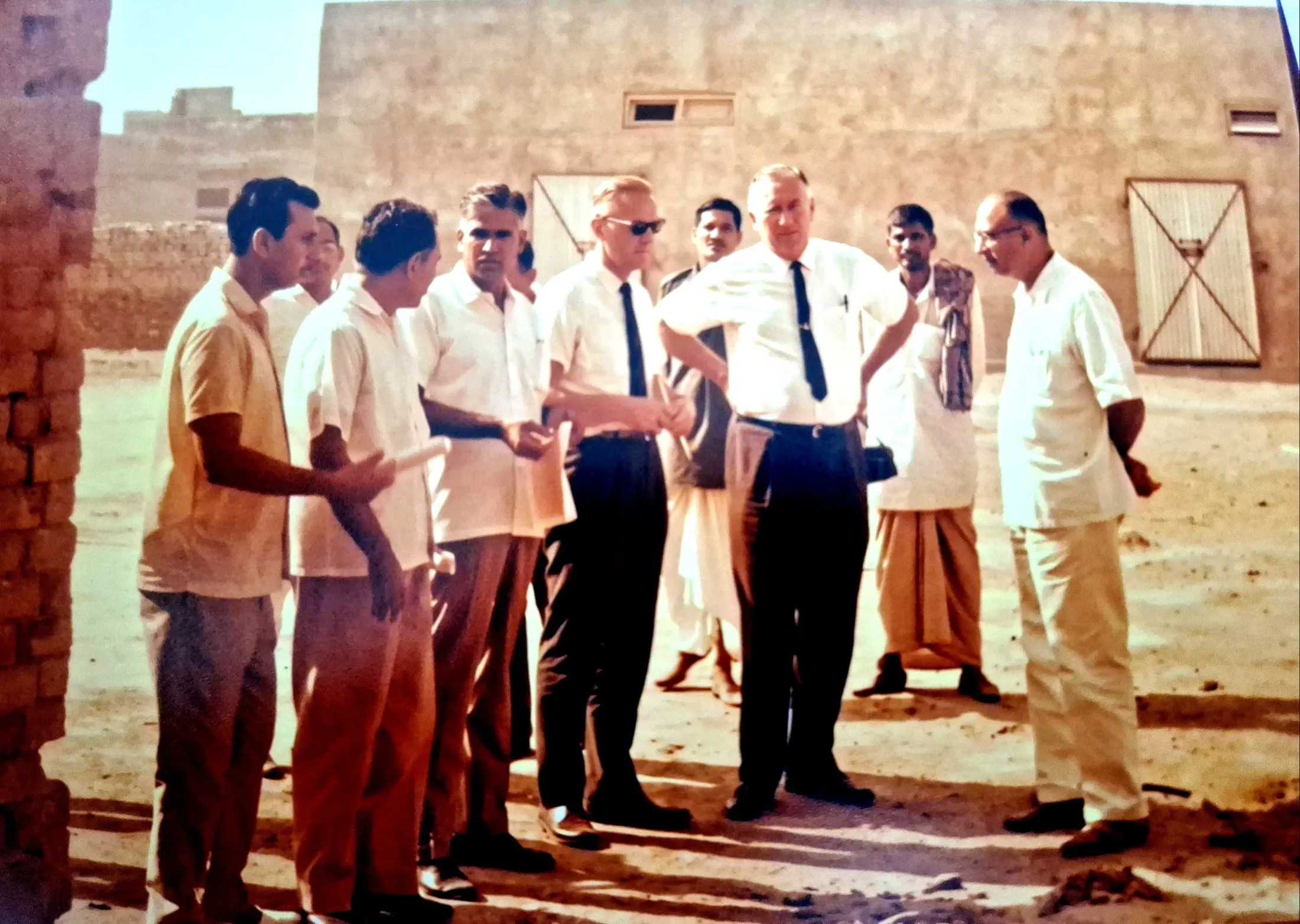
On site outdoors, two foreign visitors and the management team discuss the next building.
Planning the next building.

1970s

Nationalization

Under Zulfiqar Ali Bhutto's government, the mill — like industry across Pakistan — passes from private hands.

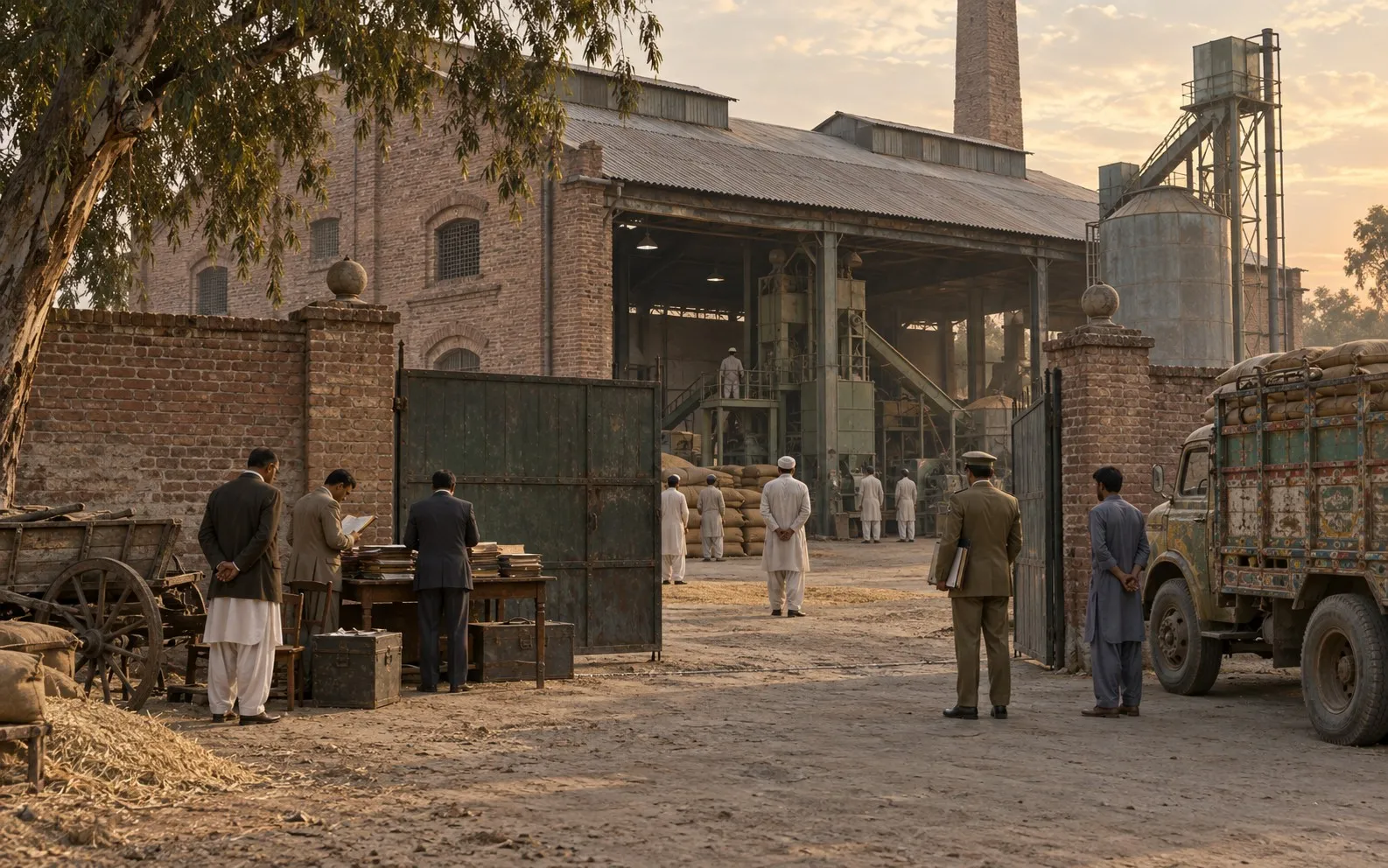
In the 1970s, the nationalization of industry under Zulfiqar Ali Bhutto’s government took the mill out of the family’s hands.

No real photograph of this chapter survives — the scene alongside is a generated, illustrative recreation, not an actual record of the event. For the better part of fifty years the name carried on without the family behind it.

An illustrative, artist-generated recreation of a 1970s mill gate scene — not a real photograph. Illustrative recreation

Today

The family returns

A new chapter: the family back at the mill, an Australian joint venture, and rice going out to the world again.

In the 2020s the family returned to the mill.

The work now runs on a joint venture with an Australian partner — bringing new milling and processing technology and international standards to the line.

From the rice heartland of Narang, Zafar Rice Mill again mills, processes, packs and exports premium rice — Basmati, IRRI and specialty long-grain — to buyers across the Middle East, Europe and beyond.

ZR

Coming soon

We're back — and so is the story.

Present-day photography of the mill, the line and the team is on its way. Check back soon for this chapter in full.

Help us finish the story

Do you recognise a face, a machine, a year?

Several details in this history are still unconfirmed. If you knew the mill — or the people in these photographs — we would like to hear from you.